
Okna pamięci – Jankiel Gincberg
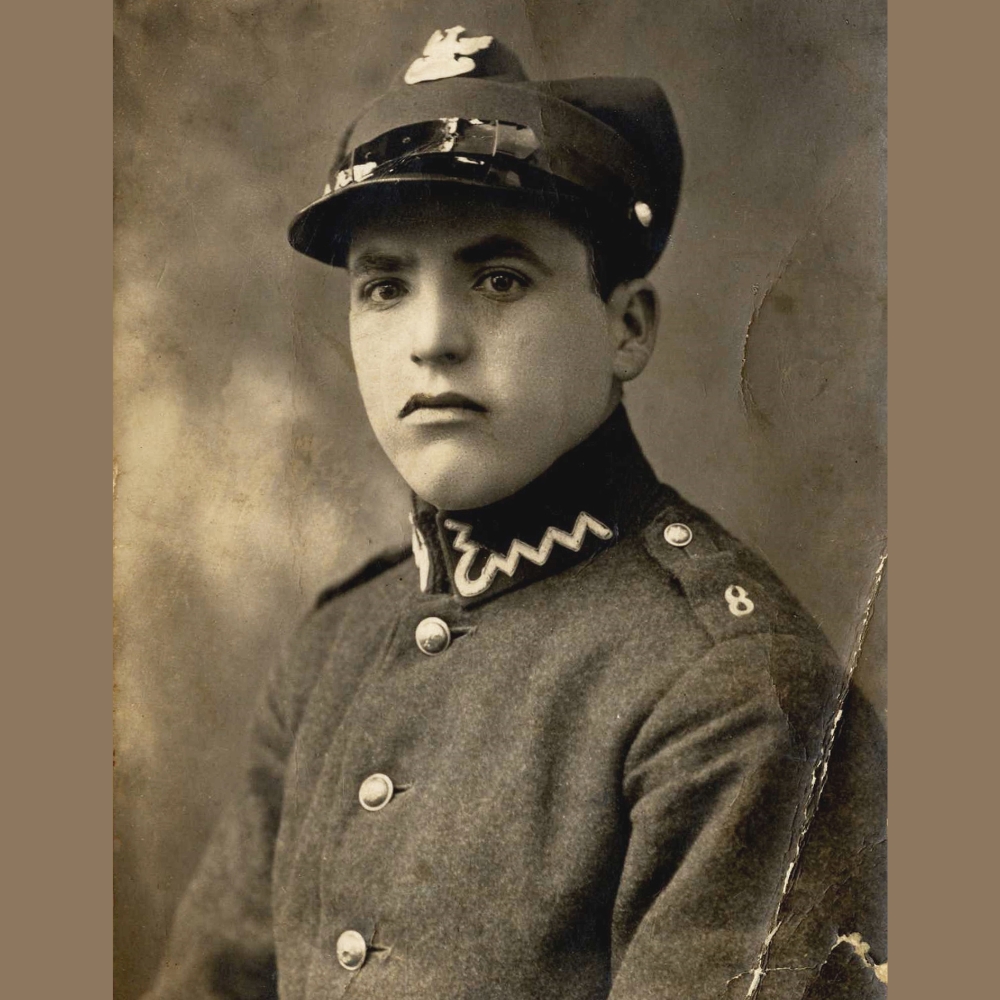
Fot. Jankiel Gincberg, lata 20. XX wieku
Zbiory rodziny Feder
Jankiel Gincberg urodził się około 1900 roku jako syn Nuty Gincberga i Chaji Sury z domu Szyr. Rodzina Gincbergów od pokoleń była związana z Dubienką, Chełmem i pobliskimi Świerżami. Nuta Gincberg wraz z trzema synami (Abusiem, Wigdoren, Jankielem) zajmował się handlem drzewnym i była to rodzinna profesja przekazywana z ojca na synów.
Jankiel ok. 1928 roku odbył służbę wojskową w Wojsku Polskim. Na zachowanej fotografii widnieje w mundurze żołnierza 8. Pułku Piechoty Legionów, stacjonującego w Lublinie.
Losy Jankla Gincberga podczas II wojny światowej pozostają nieznane. Wiadomo jedynie, że zginął w jej trakcie – brak jednak informacji o dokładnej dacie i okolicznościach śmierci.
Z rodzeństwa Jankla jedynie brat Wigdor zdołał ocaleć z Zagłady, jeszcze przed wybuchem wojny wyemigrował do Mandatowej Palestyny. Drugi brat, Abuś, przedostał się na początku wojny na teren ZSRR, lecz zmarł z powodu choroby i trudnych warunków w Taszkencie. Siostra Hinda wraz z córkami, Rywką i Gitlą, została zamordowana w niemieckim obozie zagłady w Sobiborze.
Pamięć o Janklu Gincbergu, podobnie jak o wielu ofiarach wojny i Zagłady, przetrwała dzięki rodzinnej tradycji i nielicznym zachowanym fotografiom. Jego historia wpisuje się w losy całego pokolenia, które zginęło bez grobów, często bez śladu.
Photograph by Jankel Gincberg, 1920s
Feder Family Collection
Jankel Gincberg was born around 1900 as the son of Nuta Gincberg and Chaja Sura, from the Szyr home. The Gincberg family had been connected for generations with Dubienka, Chełm, and nearby village of Świerże. Nuta Gincberg, along with his three sons (Abuś, Wigdor, and Jankiel), was involved in the timber trade, a family profession passed down from father to son.
Around 1928, Jankiel completed his military service in the Polish Army. The surviving photograph shows him in the uniform of a soldier from the 8th Infantry Regiment of the Legions, stationed in Lublin.
The fate of Jankel Gincberg during World War II remains unknown. It is only known that he perished during the war, but the exact date and circumstances of his death remain unclear.
Of Jankel’s siblings, only his brother Wigdor managed to survive the Holocaust, having emigrated to Palestine before the outbreak of the war. His other brother, Abuś, managed to cross into Soviet territory at the beginning of the war but died due to illness and harsh conditions in Tashkent. His sister Hinda, along with her daughters, Rywka and Gitla, were murdered in the German extermination camp at Sobibor.
The memory of Jankel Gincberg, like that of many victims of the war and the Holocaust, has survived through family tradition and a few preserved photographs. His story reflects the fate of an entire generation that perished without graves, often without a trace.
